Direct answer
If you are thinking of going gray, preview the destination on your own face before you stop dyeing. An AI try-on can show how silver, pewter, or salt-and-pepper might sit against your skin, brows, and current length. It cannot tell you how fast your roots will show, how your hair will feel mid-grow-out, or whether fashion bleach-to-silver is safer than letting natural gray come in. Natural grow-out and bleached silver are different roads that only look similar in a finished photo.
Try the preview on the live gray tool: What would I look like with gray hair?
Why people pause before they stop dyeing
Public posts keep asking the same cluster of questions: would gray look good on me; should I stop dyeing after years of root touch-ups; what will grow-out look like with my skin; can I go short and gray at once. Those are decision questions, not celebrity dye commentary.
People have asked this out loud for years. One post (June 2023) describes stopping dye after roots every three weeks. Another (December 2023) wonders how grow-out will look with pale skin. Beckie (January 2025) links stopping dye to a fear of short hair. Amalwaysright (May 2026) mentions going grey with a stylish short cut in a mixed personal narrative. Others ask Grok to try ash grey or simply whether gray would look good. These are proof that people ask — not rankings or medical case studies.
Natural gray grow-out is not fashion silver
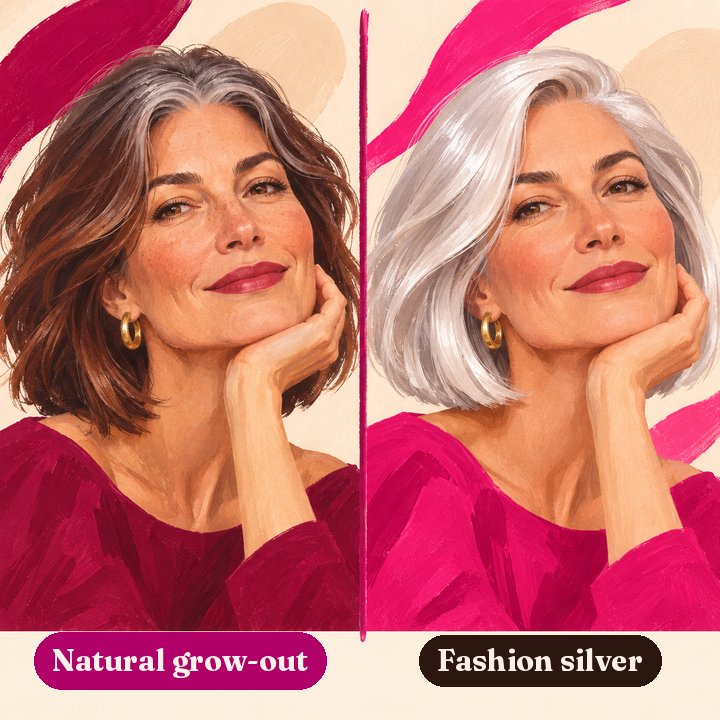
Keep the two paths separate.
Grow out natural gray. Stop covering roots; new growth arrives without pigment as follicles stop making melanin — a normal aging process described by dermatology sources. A photo preview helps you see whether fully grown-out gray or salt-and-pepper flatters your face. It does not settle the timeline for your length, density, texture, or mid-transition awkwardness.
Dye or bleach to silver on purpose. Dark hair often needs lightening, then toning; upkeep is a salon plan. A preview helps you judge whether the finished cool silver look is worth the journey. It does not settle chemistry, sessions needed, breakage risk, or an exact toner schedule.
American Academy of Dermatology (AAD) materials describe gray hair as a normal aging change when follicles stop producing melanin, and note dye as a cosmetic cover — not a medical cure. Cleveland Clinic states scalp hair grows about 1 centimeter per month. That rate is why grow-out feels slow: every inch of previously dyed length is roughly months of waiting unless you cut some of it off. Do not treat any blog number as a personal medical timeline.
HairGlimpse’s gray landing separates “growing it out” from “dyeing it silver,” and its page copy describes several gray directions (for example salt-and-pepper versus cooler silver). Prefer a softer blend direction for grow-out thinking; cooler polar silver only if you mean fashion color — then confirm what the live UI actually offers when you try on.
Gray or grey. American gray is the canonical landing at /what-would-i-look-like-with-gray-hair. British grey spelling is welcome in search, but the live tool page uses gray.
The stop-dyeing and short-hair anxiety loop
Stopping dye does not automatically require a pixie. But many people consider cutting shorter because shorter length removes dyed ends sooner, a structured short cut can make early silver look intentional, and the fear of “short doesn’t suit me” can block the grow-out decision itself.
Treat length and color as two decisions. Preview gray on your current length first. Separately, if cutting is on the table, compare short silhouettes on the same selfie via What would I look like with short hair? — then ask a stylist what your density can support. The phone does not weigh your strands.
What a gray preview can — and cannot — tell you
Borrowed from HairGlimpse’s honest try-on framing, applied to going gray.
Can help. Whether cool silver, softer pewter, or salt-and-pepper reads better against your undertone and brows. Whether “gray = older” is a costume on your face or simply a color shift. Whether you still recognize yourself when only the hair changes. Whether pairing gray with a shorter shape feels deliberate before you book both changes.
Cannot tell you. Exact salon chemistry, lift, or toner formulas. How roots will look at week three, month six, or after a bad-hair Tuesday. Whether your hair will break, brass, or need multiple bleach sessions for fashion silver. A guarantee that AI left every facial detail untouched — the site instructs the model to preserve identity, and also states AI can still alter facial details. Always compare the preview to your original photo. Medical advice about why you are graying or whether you “should” stop dyeing.
For a fuller can/can’t split on try-ons in general, see What an AI hairstyle try-on can — and can’t — tell you.
A five-step destination-first checklist
Write the path you mean. Grow-out natural gray, or fashion silver? Circle one.
Take one clear selfie. Front-facing, hairline visible, even light, no beauty filter — same rules as the product selfie tips.
Run one or two gray directions on the gray try-on page. Prefer a softer salt-and-pepper or pewter direction if you mean grow-out; cooler polar silver only if you mean bleach fashion color.
Identity check. If eyes, jaw, or skin look like someone else, discard that frame.
Bring a shortlist, not a mood board. Two frames max plus one sentence of intent for your stylist or colorist (how to show a try-on to your stylist).
Optional: if you also want a non-gray color direction while you decide, the hair color changer stacks comparisons on one board — useful when you are weighing “keep dyeing” versus “go gray,” not as a promise of salon results.
Try the destination, then decide
Upload a selfie and preview gray on your own face before you throw away the dye box or book bleach.
Your first preview is free, with no account or card. Signing in with Google adds 10 credits for one more look. Pack details live on pricing.
Want a non-gray colour fork while you decide? Compare directions on the hair color changer.
Should I stop dyeing my hair and go gray?
Only you and (if you want one) a stylist or colorist can decide. A useful first filter is visual: preview the grown-out destination on your face. If you dislike the preview under plain light, you learned something cheaply. If you like it, plan the transition — blend, cut length, or patience — with a human who can see your real hair.
Is going gray the same as dyeing hair silver?
No. Natural gray arrives as new growth without pigment. Fashion silver on dark hair is usually a lightening and toning project with ongoing maintenance. Preview both ideas separately so you do not confuse a soft salt-and-pepper future with a high-contrast bleach look.
How long does growing out gray hair take?
It depends on how much dyed length you must replace and whether you cut. Cleveland Clinic notes scalp hair grows about 1 cm per month. Longer dyed lengths take longer unless you cut. Treat any “12–18 months” figure as a rough planning range from product or educational copy, not a personal prognosis.
Will gray hair wash me out?
Sometimes. Cool silver can flatter cool undertones and strong brows; warm undertones often prefer pewter or blended salt-and-pepper. The only honest test is gray against your skin in your lighting — which is what the try-on is for.
Can an AI preview replace a colorist?
No. Use it for silhouette and color-direction risk. Use a professional for chemistry, hair health, and maintenance. AAD coloring tips also note that lightening many shades involves higher peroxide and more damage risk — another reason to be sure before session one.
Gray or grey — which page should I use?
Use the live American-spelling page: what-would-i-look-like-with-gray-hair.
The honest rule: preview the destination before you stop dyeing. Natural grow-out and fashion silver only look alike in a finished photo. Run gray on your selfie, keep frames that still look like you, then decide with a human who can touch your hair. First preview free — no account, no card.